
How good are fake Audemars Piguet Royal Oak watches?
The 41mm Royal Oak (15400, 15500 and 15510) and the thin 39mm “Jumbo” (15202, 16202) are among the most copied luxury watches. Replica forums associate APS with clones of the 15500/15510 using a copy of AP’s calibre 4302, and ZF with the older 15400 and a copy of calibre 3120.
The Royal Oak is defined by hand-finished bevels, alternating brushed and polished surfaces, and the “Grande Tapisserie” dial. Super clones get the shapes right; the finishing and the movement are where they fall short.
The price test
Before you look at a single photo, compare the asking price with what genuine examples really sell for. These are Caliber’s current estimates, updated November 2026:
| Reference | Good, watch only | Excellent, box & papers | Verify very carefully below | Likely fake or scam below |
|---|---|---|---|---|
| Royal Oak 15510ST (41mm) | $33,260 | $46,200 | $21,620 | $16,630 |
| Royal Oak 15500ST (41mm) | $37,280 | $40,300 | $24,230 | $18,640 |
| Royal Oak “Jumbo” 16202ST (39mm) | $62,520 | $82,700 | $40,640 | $31,260 |
| Royal Oak 15400ST (41mm) | $33,020 | $35,700 | $21,460 | $16,510 |
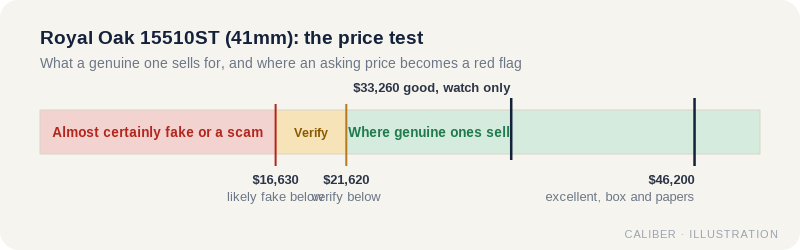
A fair price doesn’t prove a watch is real. Scammers selling a super clone as genuine often price it only 10–30% under market, so it looks like a deal rather than a fake. The price test catches the crude scams; the checks below catch the clever ones.
Bezel screws and the dial
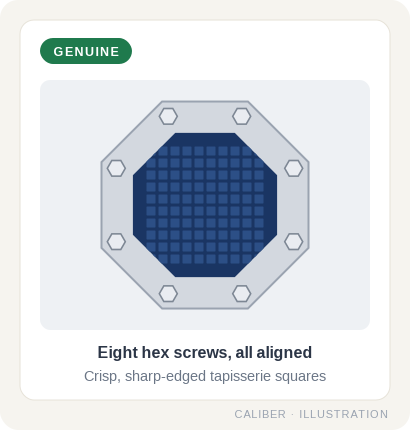
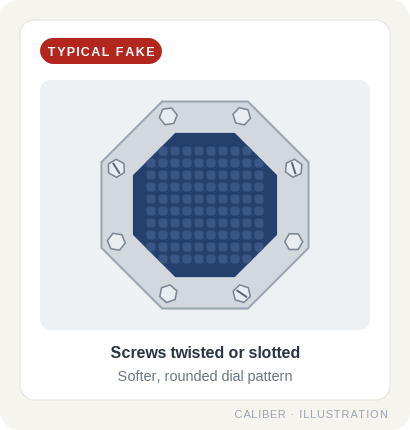
- Eight hexagonal screws. On a genuine Royal Oak the hexagonal screw heads on the bezel are all aligned the same way. Misaligned screws, slotted heads, or screws that look printed or engraved are red flags.
- Tapisserie dial. The waffle pattern should be crisp, with sharp, evenly sized squares and clean edges where it meets the markers and the date window. Fakes often look softer or shallower.
- Applied logo and markers. Edges should be sharp and polished, with even spacing.
Case, bracelet and thickness
- Bevels. Every bracelet link has a polished bevel along its edge between brushed surfaces. On the genuine watch the line is sharp and even all the way round; on fakes it’s often rounded or uneven.
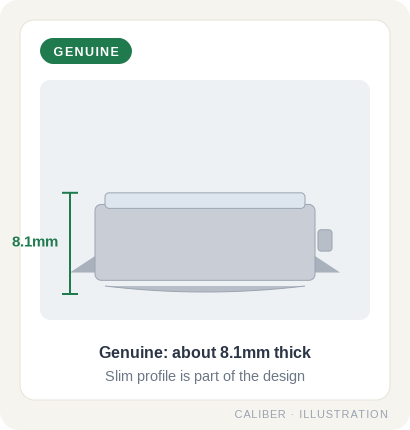
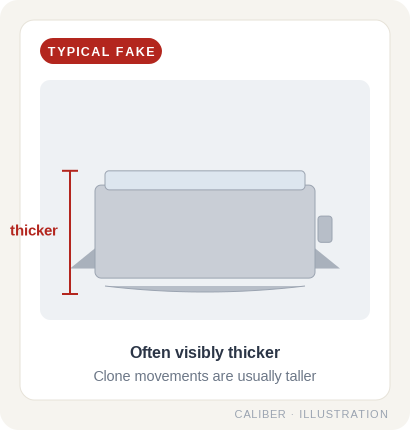
- Thickness. The “Jumbo” is famously thin at about 8.1mm. Clone movements are usually taller, so a fake Jumbo tends to look thick from the side. Ask for a side-profile photo.
- Bracelet feel. The genuine bracelet is dense and tapers smoothly to the clasp, with tight, solid links.
The movement through the display back
Every modern Royal Oak has a display back, which helps buyers. The genuine calibre 4302 (15500, 15510) has a 22-carat gold rotor and fine Côtes de Genève striping and hand-bevelled bridges. The Jumbo’s calibre 7121 (16202) has a gold rotor and similar finishing. Clone movements copy the layout, but under magnification the striping, bevels and rotor finishing are flatter and coarser. A watchmaker or AP service centre can confirm.
Your checklist before you buy
- Compare the all-in price with the table above, or run the listing through Price check.
- Check the seller’s history at this price level. Be wary of new or reactivated accounts.
- Match the reference and serial across the watch, the papers and the listing, and search the serial online.
- Ask for clear, timestamped photos, including the side profile, the caseback and the clasp, and run the checks on this page.
- Make the sale conditional on a watchmaker’s inspection with the case open, or buy through a service that authenticates. Pay only with buyer protection.
Check a Audemars Piguet Royal Oak priceSee live listingsHow good are fakes? Overview
Common questions
How do you tell a fake Royal Oak?
Check the price and seller first, then the eight bezel screws (aligned hexagonal heads), the crispness of the tapisserie dial, the polished bevels on the bracelet, the case thickness and the movement finishing through the display back.
What is an APS Royal Oak?
A replica Royal Oak associated with the “APS” factory, usually copying the 15500 or 15510 with a clone of AP’s calibre 4302. Any listing mentioning APS is selling a fake.
How thick is a real Royal Oak Jumbo?
About 8.1mm. Fakes are often noticeably thicker because clone movements are taller.
How much is a real Audemars Piguet Royal Oak?
See the price table on this page for Caliber’s current estimates by reference.